
Call Now (610) 460-0135
Call Now (610) 460-0135
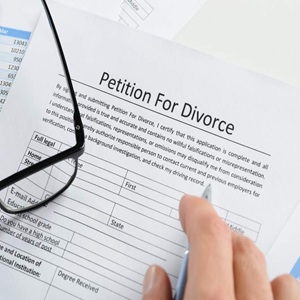
Before filing for divorce in Pennsylvania, it is important to understand the process of filing for divorce and what effects that will have on your life. While the divorce process can be complex, there are a few basics that you should know before starting the process. Here are some frequently asked questions that the Greenberg Legal Group often receives about filing for divorce in Pennsylvania:
You start the process of filing for divorce in Pennsylvania by filing a Divorce Complaint with the Prothonotary’s Office in the Court of Common Pleas in the county in which you or your spouse reside. By filing a Divorce Complaint, you are opening a divorce case with the Court of Common Pleas so that further proceedings can take place. The Divorce Complaint should explain certain background details of your marriage such as the date you became married, if you have any children with your spouse, your grounds for divorce and the relief you are seeking from the Court.
When you file your Divorce Complaint, you must decide which county you want to file in. Of course, there are rules that govern which county or counties a person may file for divorce in to ensure that the parties have a connection to the county in which the divorce case is filed. Pursuant to 23 PA Cons. Stat. § 3104, the divorce action can only be filed in a county in which either party has resided for at least six (6) months immediately prior to the filing of the divorce action. If you and your spouse have lived together or in the same county for six months prior to the filing of the action, that county would be the appropriate venue for the divorce action. Alternatively, if your spouse has resided in a different county than you for at least six months, you may elect to file in that county instead.
The timeline for obtaining a divorce depends heavily on whether both spouses agree to the divorce and its terms. An uncontested, mutual-consent divorce is by far the faster route: under 23 Pa.C.S. § 3301(c), once both parties sign consent affidavits affirming their agreement to get divorced, there is a mandatory 90-day waiting period from the date the complaint is filed. Once the 90-day waiting period has passed, the court can enter the divorce decree — provided the parties have already worked out a settlement agreement covering property division, alimony, and any custody issues. In practice, most uncontested cases finalize in roughly 4 to 6 months, which is a much shorter timeframe than if the case is contested.
A contested divorce takes considerably longer. If one spouse won’t consent, Section 23 Pa.C.S. § 3301(d) of the Pennsylvania Code requires the parties to live “separate and apart” for a full 12 consecutive months before the filing spouse can proceed unilaterally on no-fault grounds. After that year runs, the filing spouse submits an affidavit asserting the marriage is irretrievably broken and the other spouse has a limited window of time to respond. Factoring in time for discovery, mediation and possibly a trial relating to property, support, and custody, contested cases commonly take 12 to 24 months from beginning to end. This is especially true with complex cases involving significant assets or custody disputes.
Pennsylvania’s grounds for divorce are set out by statute 23 Pa.C.S. § 3301, and they fall into two categories: fault-based and no-fault.
The fault-based grounds are set forth in 23 Pa.C.S. § 3301 (a). Under that section, a spouse can seek divorce as the “innocent and injured” party by showing the other spouse committed one of the following: willful and malicious desertion lasting one year or more; adultery; cruel and barbarous treatment that endangered the injured spouse’s life or health; bigamy (knowingly entering a second marriage while the first is still valid); a criminal sentence of two or more years’ imprisonment; or “indignities” — a catch-all covering a pattern of conduct that rendered the innocent spouse’s condition intolerable and life burdensome. Fault grounds are less commonly used today because they require proving the other spouse’s misconduct, which can add time, cost, and conflict to the case, but they can matter strategically in some situations, including for alimony purposes.
The no-fault grounds are far more commonly used and come in three forms: mutual consent, where both spouses agree the marriage is irretrievably broken and file consent affidavits after a 90-day waiting period; a one-year separation, where either spouse can proceed unilaterally by showing they’ve lived separate and apart for at least 12 consecutive months and the marriage is irretrievably broken; and institutionalization, a less commonly invoked ground involving confinement of a spouse in a mental institution for at least 18 months with no reasonable prospect of recovery.
Keep in mind that more than one ground for divorce may apply to a particular set of circumstances. The appropriate grounds on which to file for divorce is a strategic decision that depends on the facts of each particular case. In order to determine which grounds for divorce, if any, apply to your case, it is extremely important that you consult with an experienced attorney.
The attorneys at Greenberg Legal Group LLC have extensive experience representing clients in divorce actions. Our office is located in King of Prussia, Pennsylvania and serves clients throughout the State of Pennsylvania, including Montgomery County, Bucks County and Chester County. Please contact our office at (610) 460 – 0135 for further assistance.

Call Now (610) 460-0135